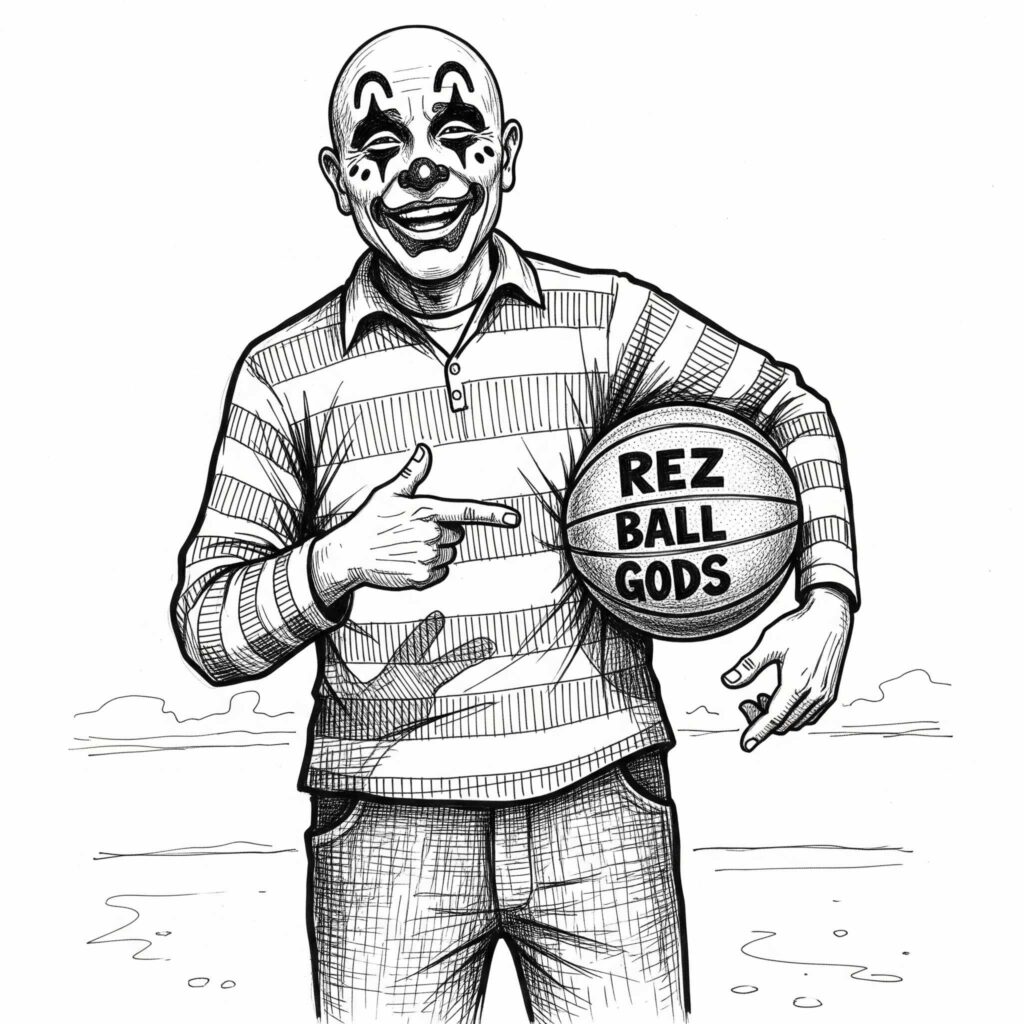
Ink and Shadows
“The powerful gather while the ink runs thick, spilling secrets wrapped in riddles—where the truth is folded beneath layers of stories designed to blind and bind.” ~ The Clown
Hotels in Bismarck counted their shekels. The Missouri River States Committee for the Progress of All Great Things congregated for first time in April of 1942, not long after the Warriors’ dubious defeat. An unholy collection of Congressional Staffers, senior officers from the Army Corps of Engineers, Department of Interior scientists, greedy utility companies, and beltway bandits had arrived on westbound trains to certify what they’d already determined. In years to come, their visit to the great plains would be immortalized by the Three Affiliated Tribes as Thieves Congregated to Rob Indians of Their Only Remaining Assets.
The agenda was a layer cake of lies and half truths about economic development, low cost and steady electricity, trophy fishing, flood control, and what a great deal constructing a dam would be for all North Dakotans. Hanging over the proceedings was the possibility that pesky Indians might show up to raise a fuss. The threat of a misguided white citizen or two with dreams about the beauty of natural rivers might surface. Not to worry, the press knew how to deal with degenerates.
The Bismarck, Fargo, Minot, Williston, and Grand Forks newspapers sent reporters. Back home the presses were oiled. A few choice crumbs falling from federal purse could boost the economic prospects for their city readers and might even be spread to their rural cousins. But it would require skillful reporting plucking just the right heart strings. Ink stained wretches from throughout the state rejoiced. Odin dreamed about a new wave of caustic editorials he’d spread, anonymously of course.
Odin penned, “Indians Have It Made,” as picked up by The Bismarck Voice, “The Bottom Lands are Valuable but the Scandinavians and Germans Got Shut Out!” News of the war in the Pacific and Europe was shuttled to the second page. The Williston Telegraph and Hard Times also knew how to stir up the rubes, “Are You Tired of No Electricity and Living in the Dark?” and “It’s OK if the Waters Rise! Someone Has to Lose!” The small town newspapers joined in the assault. Odin’s anonymous editorials were unleashed from border to border
Frying these fish came at a cost for Fort Berthod. Stories about the theft of the Warrior’s championship trophy faded. Missing, too, was mention of who was first living on the prairie and bottomlands before the white invasion. The next wave of editorials tried to dismiss both events, “Indians living on our valuable bottomlands don’t want it, won’t work it, and while this paper is an ardent fan of reservation basketball and vigorously celebrates the valor of young Indians as was recently on display in the state tournament even in their losing cause, North Dakota’s red brothers and sisters must simply give way to the inevitable progress that the new dam will bring. Prosperity will lift all boats, even if some are just canoes. Long live the Roughrider State!” The exact details of how the title game had been stolen got no ink. The Clown sighed. The best way to catch a honyocker is to feed him or her only small portions of what everybody else is smacking their lips over. Plenty of time to hit them over the head once they’re heading your way.
The Grand Forks newspaper, The Red River Black Dirt chimed in. “The Indians have nothing to complain about. If a clodhopper’s shoe was on the other foot and those hearty Scandinavian and German farmers from the Red River Valley were asked to move to the bleak prairie where the soil is less fertile, the winds blow harder, and insects abound, they would meet with success because of their superior, innate character and enviable moral upbringing.” Odin had penned this screed earlier in the week, of course. “We must demand that our red brothers and sisters to do the same. The Indians should heed this paper’s advice and take their money, pay off their many debts to white society, and run fully toward more successful lives, not to the nearest liquor store.”
After the initial onslaught had died down, the editors realized that North Dakota couldn’t make the dam happen by itself. The support of outsiders, even non-Germans and Scandinavians, would be required to secure Congressional funding. A pathway to the outside world was pondered. The sleepy little state must now offer itself up as a full partner to 47 other states. But, how to bring home national culture in a way that would support the dam? A local polka band was hired to hijack the lyrics of Woody Guthrie’s recent hit song “This is Your Land.” Damn the copyright lawyers in New York City. An innocent re-do would show the nation that North Dakota stood shoulder to shoulder with the best of America.
Indian Land Isn’t Their Land, It’s Our Land,
North Dakota is Brave, The Brutal Truth We Understand
From Fargo and the Black Earth of the Red River Valley
To Dickinson and West River’s Dusty Little Gullies,
This Dam Will Be Built For You And Me.
When Thieves Gather
“What white man can say I never stole his land or a penny of his money? Yet they say that I am a thief.” ~ Sitting Bull
He She had been invited to the Commission meeting to testify and to bring the chair and several tribal members with him. It must have been the fan mail he sent to Colonel Lewis Pick, the controversial architect of the proposed dam, who had suggested his name he thought. He She had carefully worded his letter to feed the Colonel’s and his own ego. He had told Pick how he, Mamzer Hearsay Esquire, could quickly bring the Three Affiliated Tribes to heel.
He had told no one back on the Rez about this official summons and had snuck quietly down the backroads to Bismarck. His pink satchel yawned on the passenger seat unaware of the vengeance promised by its owner’s breath. Bismarck was a big town. Maybe, just maybe he’d get lucky and find a boyfriend. Drool decorated his gums and lips as he drove south. What would the Colonel do if he saw him slobbering like this? He jerked himself up. He’d dry off beforehand. He’d show them. His grandmother would be proud. The grinding of the gravel underneath his tires drowned out any guilt he might have felt. He couldn’t hear the Hidatsa drummers and its lead singer, Only Man, alongside his car. He was also oblivious to the Gjallarhorn.
Hopping out of the car and scurrying into the hotel Mamzer found the committee’s smoke filled room. An astute observer soon wouldn’t be able to distinguish cigarette smoke from smokescreens. It took little effort to spot the connivers and Dakota-style backsliders. He She slunk to his seat. North Dakota’s junior senator, Bill Langer, a man now under investigation for bribery, kickbacks, and other misconduct during his time as governor presided. He began with a prayer invoking the nation’s founders and those that had perished settling North Dakota. The crown squirmed.
The senator invited the notorious Colonel Lewis Pick to the dais “Colonel you’ve helped the citizens of many states through which the Mighty Missouri flows by planning steps to tame that problem river. In our previous conversations, you’ve informed me of your thinking about that old rascal of a river and what needs to happen, especially here in North Dakota to ensure that we have yard lights and maybe even streetlights for our growing towns. It would also be nice to light our curling rinks. You’ll also go a long way to ensure that our boots don’t get wet and muddy when it floods. We’re honest here, sons of the soil, and far removed from any impulse to engage in bribery or kickbacks from this project. We so appreciate your expertise. We want to start this meeting by thanking you.” A polite round of applause followed.
“Thank you, Senator, and members of the committee,” the Colonel began. “I’d thank my staff, too, but they’ve been whinners and hate working long hours and every weekend, so a fie on them and anyone else here whose intellectual powers run at too low of a voltage to mount an effective argument to counter what I’m going to tell you that will happen with or without your vote of approval here today.” That was a mouthful, Mamzer marveled. That’s how to get their attention. A master class.
Colonel Pick went on to explain that the project would indeed light up the rural landscape thereby ensuring unprecedented prosperity for North Dakota. Cheap light bulbs in every farmyard! Their feedyards would never be swallowed by errant floodwater. Similar dam projects were underway up and down the Missouri and he alone could personally guarantee this string of dams would be built, he also knew that their operation and continued existence would depend on the resolve of North Dakotans.
“This is a great state,” Pick continued. “But you can’t guarantee your future for your families and grand children without the Garrison Dam! Only a sissy would back away now. Besides it won’t cost you a dime! The federal government will pay for every cubic yard of rock and concrete. I know you’re all patriots of the first order and will join with me to support this construction. The dam will create so many opportunities that if you vote ‘no’ your descendants will change their last names. For you Scandinavians, a vote against the project means no Krumkake for you at Christmas and no Lutefisk throughout the year. For you Germans, it means that you’ll be complicit in your countrymen’s natural inclination for fascism. Even if you could sneak some cookies, you won’t have enough lights in your house to watch yourself eat it. Your neighbors won’t be able to peer in your windows when you salute your portrait of Der Führer and that might be a good thing.” The crowd caught the joke. Passive aggressive laughter filled the room. The Colonel nodded at the panel and sat down.
The trick was done. The audience leapt up cheering. The clapping only died down after three minutes passed. Mamzer timed it. He was in awe of the Colonel’s performance. It reinforced his own rant before the Tribal Council that got him hired. Now it was his turn.
“Mr. Hearsay,” the Senator announced as the audience’s attention reached the crescendo and Mamzer scurried to the microphone, “You represent the Three Affiliated Tribes, is that correct?”
“Yes, I’m the tribe’s very able attorney and have been for the past three months.” He She replied.
“Do you believe in providing steady and affordable electricity to rural North Dakota?” Dye asked. “Do you believe in recreation? Do you think flood control is necessary? And, do you believe that progress in this great state is only possible if we build a dam on the Missouri River?”
“I respond respectfully by uttering an emphatic ‘Yes’ to all four questions, Mr. Chairman,” He She replied. There might be a job in DC if he played his cards right here. There’d be many more potential boyfriends there. “Senator and Members of the Esteemed Commission, progress must not be stopped. Rural residents need predictable lights in their homes, fish in their lakes, and yard lights on their farms to scare away marauders. My Indians feel the same way.”
“They do?” the senator asked incredulously. “Mail I’ve received from my Red Brothers has been running against the dam. You’re 100 percent positive of this view, Mr. Hearsay? The Indians you represent will comply without further reservations, if you pardon my pun?”
“Yes, I am. I have the full weight of the tribe behind me and am their official spokesman. Unfortunately, many tribal members were unable to attend today’s meeting. There has been limited participation from Fort Berthold, which some attribute to a prevailing sense of resignation given the circumstances. While there may be disagreements within the community, my understanding is that the tribe is willing to accept the decision for the greater good. Therefore, I believe we should proceed with building the dam as planned. The tribe will happily move out of the valuable bottomlands. They’re happy to benefit their Viking and Kraut brothers and they’ll pay for their own move to the top lands. Some of them also have blue eyes.”
The Clown smelled the subterfuge immediately. Speak for the victim by stuffing their mouth with your own words and then blame them for not yelling back. Nobody knows or truly cares about genuine ignorance and apathy he mused. Oh irony, Mamzer be thy name.
“Done!” The senator banged the gavel on the liar’s table. Fate was sealed. No one noticed the gavel had turned purple. Flash bulbs popped, the audience rejoiced, and the gavel disappeared only to be snared twenty years later by a fisherman casting for trophy fish in the new lake.
From the back of the room, Colonel Pick skipped up to Hearsay and gave him a hug. The Colonel’s staff was aghast. How had they not been honored for their work? Why was this clammy little man cornering the Colonel’s affection? “You’re quite a young man, Mr. Mamzer. Thank you for helping plow this field. Now, how can I help you?”
“Well. I hear good things about Washington, DC. And I know the Bureau of Indian Affairs stands for ‘Boss Indians Around.’” Mamzer winked.
The next day’s Bismark Voice led the charge, “Indians Finally Relent! Dam Coming!” The full article went on to say, “After spirited but respectful debate, and with a display of much appreciated affection for their White brothers, the Three Affiliated Tribes through its spokesman, Mamzer Hearsay, made public yesterday their wish that progress for all citizens of the Roughrider State was more important than their own parochial interests. Their holdings on the bottom of the Missouri are valuable, the richest land outside of the Red River Valley on our grand state’s eastern border, and the Indians acknowledge that they’ve never used it to its full potential. It’s clear that the tribe has spent way too much time worshiping its basketball team when it should have been preparing the cultivation of its fields and not squandering its opportunity for agrarian wealth. Land unused is land abandoned. We wish the tribe luck with their relocation to the top lands of the Mighty Missouri. This paper is also disposed to say that we’re happy that the tribe will move its own members and their sparse possessions without taxpayer assistance.”